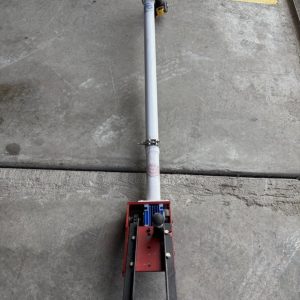
The Aircraft Electric Tow Bar – Mini Max Style offers a space-saving approach to aircraft handling for operators who want powered mobility without purchasing or storing a full-size tug. An Aircraft Electric Tow Bar can reduce the physical effort associated with pushing or pulling an airplane while helping the operator maintain controlled movement in confined areas.
This Electric Tow Bar for Aircraft represents a cost-conscious option for private owners and aviation facilities that require occasional or regular aircraft movement. A Used Electric Aircraft Tow Bar should be inspected carefully so the buyer can confirm smooth operation, secure connections, reliable powered assistance, and compatibility with the intended aircraft.
Choosing a Mini Max Aircraft Tow Bar may help private owners handle routine aircraft positioning without investing in bulky ground-support machinery. The complete offering combines an Aircraft Tow Bar with Drill, compatible charging equipment, and a compact towing assembly for practical hangar operations.
As a Portable Aircraft Tow Bar, the unit can be stored more easily than a traditional tug and may be transported between hangars, maintenance areas, or aircraft storage locations. The Electric Airplane Tow Bar configuration offers powered assistance for controlled movement while remaining compact enough for many private aviation environments.
When evaluating Aircraft Ground Handling Equipment, owners should compare towing capacity, aircraft connection, controls, storage size, portability, and total operating cost. The unit can function as an Aircraft Hangar Tow Bar, Aircraft Moving Equipment, Electric Aircraft Mover, Aircraft Mobility Equipment, or Light Aircraft Tow Bar when verified for the intended application.
Why Owners Choose a Mini Max Style Aircraft Tow Bar
The Aircraft Electric Tow Bar – Mini Max Style is intended to combine a tow-bar connection with a powered drive arrangement for manageable aircraft movement. The exact performance will depend on aircraft weight, tire condition, ramp slope, surface material, available traction, tow-point design, and the condition of the powered components.
A Mini Max-style unit may help operators manage tight hangar spaces where a larger tug would be difficult to store, turn, or operate. Operators should still use a wing walker or additional observer when visibility is restricted, clearances are limited, or the aircraft is being moved near other equipment.
Electric Tow Bar for Aircraft Applications
An Electric Tow Bar for Aircraft may support more efficient ground handling by reducing the time and effort involved in routine positioning. The equipment can be useful for private aircraft ownership, maintenance inspections, washing, fueling preparation, hangar organization, and temporary repositioning.
An electric tow bar provides controlled movement without creating engine exhaust, propeller wash, or unnecessary noise around the hangar. Before movement begins, the aircraft should be configured correctly and checked for chocks, tiedowns, brakes, cables, covers, stands, or other restrictions.
Buying a Used Electric Aircraft Tow Bar
Purchasing used equipment can be practical for owners who need occasional aircraft movement and do not require the cost or capacity of a large commercial tug. Its replacement by a dedicated tow tug does not necessarily indicate a performance problem, but the current condition should be confirmed independently.
A responsible seller should disclose known damage, repairs, missing items, cosmetic wear, operating concerns, and any limitations discovered during use. A video demonstrating connection, forward movement, reverse movement, steering, stopping, drill operation, and charging can provide valuable evidence for a remote buyer.
Mini Max Aircraft Tow Bar Applications
A Mini Max Aircraft Tow Bar appeals to users who prioritize portability, manageable setup, and controlled movement over the capacity of a large commercial tug. Operators can often position themselves where they have a clear view of the aircraft nose, tow point, nearby obstacles, and direction of travel.
A qualified person should review the attachment method and operating geometry before the tow bar is used on an unfamiliar airplane. Correct attachment selection is one of the most important factors in achieving reliable, controlled, and damage-free aircraft movement.
Aircraft Tow Bar with Drill Maintenance
An Aircraft Tow Bar with Drill uses a compatible powered drill to drive the movement mechanism, providing a convenient source of rotational power without a separate built-in propulsion engine. Using the proper drill configuration helps the tow bar move smoothly while limiting unnecessary stress on the drive components and power tool.
The operator should begin at a low speed and increase power gradually rather than applying sudden torque that could cause abrupt aircraft movement. The drill should be stored according to its manufacturer’s recommendations and protected from moisture, impact, extreme heat, and unintentional activation.
Benefits of an Aircraft Tow Bar with Charger
Including the charger can simplify setup for the new owner and help maintain the drill battery between aircraft-moving operations. A functional test can confirm that the battery is recognized, charging begins correctly, indicator lights operate, and the unit completes a normal charging cycle.
The charger and battery should be stored in a clean, dry, protected location where they cannot be damaged by tools, vehicles, fluids, or hangar traffic. Operators may label charging dates or keep a basic equipment log when the unit is shared among several users.
Choosing a Portable Aircraft Tow Bar
The compact unit can be relocated when hangar arrangements change, aircraft are moved to another location, or floor space is needed for maintenance. Loose accessories such as the drill, charger, adapters, pins, and fasteners should be stored separately in labeled protective containers.
The tow bar should be stored where it does not block aircraft movement, emergency access, doors, electrical panels, tools, or pedestrian routes. Proper storage and accountability help a portable system remain complete, serviceable, and available when needed.
Choosing a Powered Aircraft Tow Bar
A Powered Aircraft Tow Bar can provide controlled force for moving an airplane while reducing dependence on manual pushing, pulling, or assistance from several people. A unit that appears powerful while unloaded may behave differently when attached to an aircraft on a slope, rough pavement, or high-resistance surface.
Operators should use slow speeds near hangar doors, walls, parked vehicles, tools, support stands, people, and other airplanes. The operator should never rely exclusively on the tow bar to hold an aircraft stationary on an incline.
Choosing an Electric Airplane Tow Bar
The equipment can support owners of compatible airplanes who need controlled movement before flights, after maintenance, or during hangar organization. Aircraft type alone is not enough to confirm fitment because landing-gear design, tow points, wheel pants, tire dimensions, steering limitations, and weight distribution can vary.
Even a small floor obstruction can affect the tow bar’s wheels, alter steering, or create an abrupt load on the aircraft connection. Regular practice in an open area can help a new user learn turning response, speed control, stopping distance, reverse behavior, and attachment movement.
Maintaining Aircraft Ground Handling Equipment
Private owners should consider whether they need occasional assistance, frequent daily movement, steep-slope capability, outdoor use, or commercial-level durability. A lower initial price does not always represent better value if the unit requires unavailable adapters, weak batteries, repairs, or extensive modification.
Keeping maintenance records can help owners monitor recurring wear and confirm when wheels, batteries, attachments, bearings, or drive components were serviced. Well-maintained ground-support equipment contributes to efficient hangar operations and reduces avoidable risk to aircraft and personnel.
Aircraft Hangar Tow Bar Safety
The ability to reposition an airplane conveniently can improve hangar organization and simplify access to doors, storage, tools, and maintenance areas. Before movement, the hangar door should be fully open and secured, and the planned path should be free of cords, chocks, ladders, tools, stands, and loose equipment.
Only designated personnel should operate the unit, especially in shared hangars where unfamiliar users may not understand its controls or limitations. Any damage, unusual behavior, weak battery performance, slipping, or attachment concern should be documented before the next operation.
Choosing Aircraft Moving Equipment
Aircraft Moving Equipment for light aircraft should provide sufficient powered assistance without introducing unnecessary size, complexity, or storage demands. Reasonable capacity margin can improve reliability and reduce strain on the drill, drive components, wheels, and tow attachment.
The landing gear and steering system should be handled within published limitations to prevent excessive rotation, binding, or structural stress. Regular maintenance preserves equipment value and gives the operator greater confidence during every aircraft movement.
Electric Aircraft Mover Applications
An Electric Aircraft Mover allows the operator to remain close to the aircraft while controlling direction, speed, attachment, and clearance. Low tire pressure, brake drag, wheel chocks, tiedowns, steep slopes, damaged wheels, and obstacles should be ruled out before towing continues.
The equipment may have fewer complex systems than a full-size tug, potentially reducing routine ownership requirements. Recording drill and battery model numbers can simplify future replacement and help the buyer confirm compatibility with spare equipment.
Aircraft Mobility Equipment Applications
The right Aircraft Mobility Equipment can improve hangar efficiency by allowing aircraft to be moved without reorganizing personnel or starting engines unnecessarily. Different mobility devices serve different purposes, so owners should determine whether they need straight towing, side movement, tight rotation, lifting, or long-distance transport.
Shared hangars may establish an authorization list so only trained users operate the powered tow bar. Moving to a hangar with a steeper ramp, rougher pavement, or narrower door may require different equipment or additional assistance.
Maintaining a Light Aircraft Tow Bar
Private owners often choose light-aircraft equipment because it is easier to handle and maintain than machinery designed for larger commercial aircraft. Aircraft documentation and experienced maintenance guidance can help confirm approved towing points and steering limitations.
If movement requires unusually high power, the operator should stop and inspect the airplane, surface, tow connection, and equipment. Aircraft Ground Handling Equipment Any uncertainty about capacity, condition, compatibility, or operation should be resolved before the aircraft is attached.
Long-Term Tow Bar Ownership
Maintenance requirements may be simple compared with a full-size tug, but the unit should not be treated as maintenance-free equipment. Any sudden change in speed, noise, traction, steering, drill load, or stopping behavior should be investigated promptly.
- Confirm that the towing assembly is complete, structurally sound, correctly adjusted, and free from damage that could affect aircraft movement.
- Test the drill, battery, charger, forward and reverse operation, speed response, torque setting, and stopping control before attaching the aircraft.
- Protect the system from moisture, chemicals, impact, vehicle traffic, excessive heat, freezing conditions, pests, and unintentional activation.
Choosing the Right Aircraft Electric Tow Bar – Mini Max Style
When properly matched and maintained, the Aircraft Electric Tow Bar – Mini Max Style can become a dependable tool for efficient general aviation ground handling. A successful purchase depends on attachment fit, aircraft weight, ground conditions, drill performance, charger function, structural integrity, and seller transparency.
Whether the requirement is an Aircraft Electric Tow Bar, Electric Tow Bar for Aircraft, Used Electric Aircraft Tow Bar, or Mini Max Aircraft Tow Bar, compatibility and controlled operation should guide the selection. With a clear operating path, secure attachment, charged drill, functioning charger, and trained operator, the system can simplify daily aircraft positioning.